
My NTS
Live now

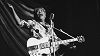
Sister Rosetta Tharpe

NTS aired an episode dedicated to the music of Sister Rosetta Tharpe on 21 March 2020. Sister Rosetta Tharpe has been played on NTS over 40 times, featured on 24 episodes and was first played on 19 February 2015.

"Sister" Rosetta Tharpe (1915–1973) was a pioneering U.S. Gospel singer and songwriter who attained great popularity in the 1930s and 1940s with a unique mixture of spiritual lyrics and early rock accompaniment. She became the first great recording star of Gospel music, first surfacing on the pop charts in 1939 with "This Train", her version of the traditional gospel standard.

Born Rosetta Nubin on the 20th March 1915 in Cotton Plant, Arkansas, she began performing at age four, billed as "Little Rosetta Nubin, the singing and guitar playing miracle", accompanying her mother, Church of God in Christ (COGIC) evangelist Katie Bell Nubin, who played mandolin and preached at tent revivals throughout the Southern U.S.A. Exposed to both blues and jazz both in the South and after her family moved to Chicago in the late 1920s, she played blues and jazz in private, while performing gospel music in public settings. Her unique style reflected those secular influences: she bent notes the way that jazz artists did and picked guitar like Memphis Minnie.

Rosetta also crossed over to secular music in other ways. After marrying COGIC preacher Thomas Thorpe (from which "Tharpe" is a misspelling) in 1934 and moving to New York City, she recorded four sides with Decca Records backed by "Lucky" Millinder's jazz orchestra. Her records caused an immediate furore: many churchgoers were shocked by the mixture of sacred and secular music, but secular audiences loved them. Appearances in John Hammond's 1938 extravaganza "From Spirituals to Swing", at the Cotton Club and Café Society and with Cab Calloway and Benny Goodman, made her even more popular. Songs like "This Train" and "Rock Me", which combined gospel themes with bouncy up-tempo arrangements, became smash hits among audiences with little previous exposure to gospel music.

Tharpe continued recording during World War II, one of only two gospel artists able to record V-discs for troops overseas. Her song "Strange Things Happening Every Day", recorded in 1944 with Sammy Price, Decca's house boogie woogie pianist, showcased her virtuosity as a guitarist and her witty lyrics and delivery. It was also the first gospel song to make Billboard's "race records" Top Ten -- something that she accomplished several more times in her career.

After the war Decca paired her with Marie Knight, a sanctified shouter with a strong contralto and a more subdued style than Tharpe. Their hit "Up above My Head" showed both of them to great advantage: Knight provided the response to Tharpe in traditional call and response format, then took the role that would have been assigned to a bass in a male quartet after Tharpe's solo. They toured the gospel circuit for a number of years, during which Tharpe was so popular that she attracted 25,000 paying customers to her wedding to her manager Russell Morrison (her third marriage), followed by a vocal performance, at Griffith Stadium in Washington, D.C. in 1951.

Their popularity took a sudden downturn, however, when they recorded several blues songs in the early 1950s. Knight attempted afterwards to cross over to popular music, while Tharpe remained in the church, but rebuffed by many of her former fans. Retreating to Europe, Tharpe gradually returned to the gospel circuit, although at nowhere near her former celebrity. Her performances were curtailed even further by a stroke in 1970 after which she lost the use of her legs. She died on the 9th October 1973 after another stroke, on the eve of a scheduled recording session.

read more

Sister Rosetta Tharpe

NTS aired an episode dedicated to the music of Sister Rosetta Tharpe on 21 March 2020. Sister Rosetta Tharpe has been played on NTS over 40 times, featured on 24 episodes and was first played on 19 February 2015.

"Sister" Rosetta Tharpe (1915–1973) was a pioneering U.S. Gospel singer and songwriter who attained great popularity in the 1930s and 1940s with a unique mixture of spiritual lyrics and early rock accompaniment. She became the first great recording star of Gospel music, first surfacing on the pop charts in 1939 with "This Train", her version of the traditional gospel standard.

Born Rosetta Nubin on the 20th March 1915 in Cotton Plant, Arkansas, she began performing at age four, billed as "Little Rosetta Nubin, the singing and guitar playing miracle", accompanying her mother, Church of God in Christ (COGIC) evangelist Katie Bell Nubin, who played mandolin and preached at tent revivals throughout the Southern U.S.A. Exposed to both blues and jazz both in the South and after her family moved to Chicago in the late 1920s, she played blues and jazz in private, while performing gospel music in public settings. Her unique style reflected those secular influences: she bent notes the way that jazz artists did and picked guitar like Memphis Minnie.

Rosetta also crossed over to secular music in other ways. After marrying COGIC preacher Thomas Thorpe (from which "Tharpe" is a misspelling) in 1934 and moving to New York City, she recorded four sides with Decca Records backed by "Lucky" Millinder's jazz orchestra. Her records caused an immediate furore: many churchgoers were shocked by the mixture of sacred and secular music, but secular audiences loved them. Appearances in John Hammond's 1938 extravaganza "From Spirituals to Swing", at the Cotton Club and Café Society and with Cab Calloway and Benny Goodman, made her even more popular. Songs like "This Train" and "Rock Me", which combined gospel themes with bouncy up-tempo arrangements, became smash hits among audiences with little previous exposure to gospel music.

Tharpe continued recording during World War II, one of only two gospel artists able to record V-discs for troops overseas. Her song "Strange Things Happening Every Day", recorded in 1944 with Sammy Price, Decca's house boogie woogie pianist, showcased her virtuosity as a guitarist and her witty lyrics and delivery. It was also the first gospel song to make Billboard's "race records" Top Ten -- something that she accomplished several more times in her career.

After the war Decca paired her with Marie Knight, a sanctified shouter with a strong contralto and a more subdued style than Tharpe. Their hit "Up above My Head" showed both of them to great advantage: Knight provided the response to Tharpe in traditional call and response format, then took the role that would have been assigned to a bass in a male quartet after Tharpe's solo. They toured the gospel circuit for a number of years, during which Tharpe was so popular that she attracted 25,000 paying customers to her wedding to her manager Russell Morrison (her third marriage), followed by a vocal performance, at Griffith Stadium in Washington, D.C. in 1951.

Their popularity took a sudden downturn, however, when they recorded several blues songs in the early 1950s. Knight attempted afterwards to cross over to popular music, while Tharpe remained in the church, but rebuffed by many of her former fans. Retreating to Europe, Tharpe gradually returned to the gospel circuit, although at nowhere near her former celebrity. Her performances were curtailed even further by a stroke in 1970 after which she lost the use of her legs. She died on the 9th October 1973 after another stroke, on the eve of a scheduled recording session.

Original source: Last.fm

Artist in focus

Most played tracks

Precious Memories
Sister Rosetta Tharpe
Savoy Records1968
My Journey To The Sky
Sister Rosetta Tharpe, Marie Knight, Sam Price Trio
Decca1949
His Eye Is On The Sparrow
Sister Rosetta Tharpe, Marie Knight, Sam Price Trio
Frémeaux & Associés2005
Didn't It Rain
Sister Rosetta Tharpe, Marie Knight, Sam Price Trio
Decca1947
Nobody's Fault But Mine
Sister Rosetta Tharpe
Decca1949
I Can't Sit Down
Sister Rosetta Tharpe
En Avant La Zizique !2016
Walking Up The King's Highway
Sister Rosetta Tharpe
Savoy Records1968
Up Above My Head I Hear Music In The Air
Sister Rosetta Tharpe
Complete Blues2008
Rock Me
Sister Rosetta Tharpe
Brunswick1938
Up Above My Head There's Music In The Air
Sister Rosetta Tharpe
Mercury1956