







My NTS
Live now

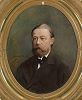
Robert Schumann

Robert Schumann

Robert Schumann has been played on NTS over 30 times, featured on 34 episodes and was first played on 6 September 2016.

Robert Schumann (8 June 1810 – 29 July 1856) was a German composer, pianist, and music critic associated with the early Romantic era. He composed works across a wide range of genres, including music for solo piano, voice and piano, chamber ensembles, orchestra, choir, and opera. His compositions are often viewed as representative of German Romanticism.

Born in Zwickau, Saxony, into a middle-class family with no direct musical background, Schumann initially considered careers in both law and music. He studied law at the universities of Leipzig and Heidelberg, though his main interests lay in music and Romantic literature. From 1829, he studied piano under Friedrich Wieck, but a hand injury curtailed his plans to become a concert pianist. As a result, he turned his focus to composition. His early output consisted mainly of piano works, including "Carnaval", "Davidsbündlertänze", "Fantasiestücke", "Kreisleriana", and "Kinderszenen", composed between 1834 and 1838. In 1834, he co-founded the "Neue Zeitschrift für Musik" and edited it for a decade. In his writings and compositions, he often expressed contrasting aspects of his personality, which he referred to as "Florestan" and "Eusebius".

In 1840, despite opposition from Friedrich Wieck, Schumann married Wieck’s daughter, Clara, who was a distinguished pianist and composer. That year marked a surge in Schumann's compositional output, particularly in the area of Lieder. Notable works from this period include "Frauenliebe und Leben" and "Dichterliebe". In 1841, he shifted focus to orchestral music, completing the first of his four symphonies. The following year, he wrote several chamber works, including three string quartets, a piano quintet, and a piano quartet. During the remainder of the 1840s, despite episodes of ill health, Schumann continued composing and toured Europe with Clara. His only opera, "Genoveva" (1850), was not well received and has rarely been performed since.

In 1850, Schumann became director of music in Düsseldorf. Although the position initially promised stability, difficulties arising from his introverted nature and mental health challenges led to his resignation after three years. In 1853, he and Clara met Johannes Brahms, then a young composer, whom Schumann supported in the "Neue Zeitschrift für Musik". Schumann's mental health declined severely in 1854, culminating in a suicide attempt. He was placed in a private sanatorium near Bonn, where he remained until his death in 1856.

During his lifetime, Schumann was most celebrated for his piano music and Lieder, often noted for their poetic and programmatic qualities. Other works, especially those from his later years, received less attention and were sometimes viewed as less inspired. This view has become less dominant in recent scholarship, although his early piano and vocal compositions remain central to his reputation. Schumann exerted significant influence on 19th- and 20th-century composers, including Gustav Mahler, Richard Strauss, Arnold Schoenberg, and Wolfgang Rihm in the German-speaking world, as well as Georges Bizet, Gabriel Fauré, Claude Debussy, and Maurice Ravel in France. His music also influenced Russian composers such as Anton Rubinstein and Pyotr Ilyich Tchaikovsky.

read more

Robert Schumann

Robert Schumann has been played on NTS over 30 times, featured on 34 episodes and was first played on 6 September 2016.

Robert Schumann (8 June 1810 – 29 July 1856) was a German composer, pianist, and music critic associated with the early Romantic era. He composed works across a wide range of genres, including music for solo piano, voice and piano, chamber ensembles, orchestra, choir, and opera. His compositions are often viewed as representative of German Romanticism.

Born in Zwickau, Saxony, into a middle-class family with no direct musical background, Schumann initially considered careers in both law and music. He studied law at the universities of Leipzig and Heidelberg, though his main interests lay in music and Romantic literature. From 1829, he studied piano under Friedrich Wieck, but a hand injury curtailed his plans to become a concert pianist. As a result, he turned his focus to composition. His early output consisted mainly of piano works, including "Carnaval", "Davidsbündlertänze", "Fantasiestücke", "Kreisleriana", and "Kinderszenen", composed between 1834 and 1838. In 1834, he co-founded the "Neue Zeitschrift für Musik" and edited it for a decade. In his writings and compositions, he often expressed contrasting aspects of his personality, which he referred to as "Florestan" and "Eusebius".

In 1840, despite opposition from Friedrich Wieck, Schumann married Wieck’s daughter, Clara, who was a distinguished pianist and composer. That year marked a surge in Schumann's compositional output, particularly in the area of Lieder. Notable works from this period include "Frauenliebe und Leben" and "Dichterliebe". In 1841, he shifted focus to orchestral music, completing the first of his four symphonies. The following year, he wrote several chamber works, including three string quartets, a piano quintet, and a piano quartet. During the remainder of the 1840s, despite episodes of ill health, Schumann continued composing and toured Europe with Clara. His only opera, "Genoveva" (1850), was not well received and has rarely been performed since.

In 1850, Schumann became director of music in Düsseldorf. Although the position initially promised stability, difficulties arising from his introverted nature and mental health challenges led to his resignation after three years. In 1853, he and Clara met Johannes Brahms, then a young composer, whom Schumann supported in the "Neue Zeitschrift für Musik". Schumann's mental health declined severely in 1854, culminating in a suicide attempt. He was placed in a private sanatorium near Bonn, where he remained until his death in 1856.

During his lifetime, Schumann was most celebrated for his piano music and Lieder, often noted for their poetic and programmatic qualities. Other works, especially those from his later years, received less attention and were sometimes viewed as less inspired. This view has become less dominant in recent scholarship, although his early piano and vocal compositions remain central to his reputation. Schumann exerted significant influence on 19th- and 20th-century composers, including Gustav Mahler, Richard Strauss, Arnold Schoenberg, and Wolfgang Rihm in the German-speaking world, as well as Georges Bizet, Gabriel Fauré, Claude Debussy, and Maurice Ravel in France. His music also influenced Russian composers such as Anton Rubinstein and Pyotr Ilyich Tchaikovsky.

Original source: Last.fm

Tracks featured on

Most played tracks

Symphony No. 4 in E minor, Op. 98 1 I. Allegro non troppo 12'58
Bruno Walter, Gustav Mahler, Richard Wagner, Ludwig van Beethoven, Wolfgang Amadeus Mozart, Felix Mendelssohn-Bartholdy, Richard Strauss, Samuel Barber, Antonín Dvořák, Johannes Brahms, Johann Strauss Jr., Franz Schubert, Anton Bruckner, Joseph Haydn, Robert Schumann, Bedřich Smetana
Sony Classical2012
Kinderszenen, Op. 15
Schumann, Benjamin Oren
Prestige De La Musique0
Trio in D Minor, Op. 63
Brahms, Schumann, Rubinstein, Szeryng, Fournier
RCA Red Seal1974
Vzpomínky Na Čechy Ve Formě Polek, Op.13 = Memories Of Bohemia In The Form Of Polkas
Haydn, Schumann, Handel, Brahms, Reger, Smetana, András Schiff
Warner Classics2007
Träumerei
Schumann
Bertelsmann Schallplattenring0
Cello Concerto In G Minor
Jacqueline Du Pré, Boccherini, Dvořák, Elgar, Haydn, Monn, Saint-Saëns, Schumann
Angel Records0
Fantasy In F Minor For A Mechanical Organ, K.608
Mozart, Albrechtsberger, Kucharz, Schlick, Muffat, Beethoven, Froberger, Pasterwitz, Königsperger, Mendelssohn, Brahms, Schumann, Franz Lehrndorfer
VoxBox1974
Hungarian Dances
Vitali, Gluck, Schumann, Brahms, Falla, Albeniz, Granados, Debussy, Glazunov, Rachmaninoff, David Oistrakh
Мелодия, Росмэн2003
Liederkreis Op. 24
Robert Schumann, Peter Schreier, Norman Shetler
Deutsche Grammophon0
Romance In F-Sharp, Op. 28
Artur Rubinstein, Alfred Wallenstein, Grieg, Falla, Liszt, Schumann, Prokofieff, Villa-Lobos
RCA Victor Red Seal1962