







My NTS
Live now

Go Hirano

Go Hirano

Go Hirano has been played on NTS over 10 times, featured on 17 episodes and was first played on 17 March 2020.

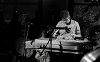
平野剛. Hirano’s work emerges from a more intimate kind of intensity; he creates a sparsely contemplative and alternately playful music that at times evokes Erik Satie or even Hiroshi Yoshimura. A multi-instrumentalist and composer, Hirano’s main tools are piano, melodica, percussion and the spaces in between the repetitions. He utilizes slight variations of gently mapped out introspection while embracing a more organic sense of openness and feeling. Speaking of his approach when he first starting out Hirano states “It seemed like a lot of musicians were aiming for perfection, but the more they applied themselves to that pursuit, the less interesting the music became. The most important thing for me was that initial, unadorned expression, regardless of whether or not the playing was technically impressive or not.”

From an early age Hirano immersed himself in a Japanese musical underground that seemed to embrace the entirety of radical and new musics emerging around the world during the 1970’s and 80’s. From new wave to noise, ambient industrial and the avant garde and his eventual discovery of P.S.F.’s record store Modern Music, Hirano began to develop an intensely perceptive ear. In one of his earliest musical forays, Hirano created music for an experimental butoh dance troupe that toured in Japan and overseas in Canada and the U.S. during the late 80’s/ early 90’s. Later he would collaborate with White Heaven, one of Japan’s most legendary psychedelic rock groups. His first album Distance released on P.S.F. in 1993 reflected a more avant garde, free form approach.

During this time Hirano began to realize that his truest form of musical expression lay along a different path from that of his peers. He set aside rock’s raw energies and the draw of abstract dissonance for more melodic, quiet sounds. “I felt like jazz and classical were too excessive, or packed too tightly with the requirements of the genre. So I thought there should be a simpler approach that integrated elements of classical and jazz but only as needed, in moderation,” Hirano said of his musical intentions. To his surprise, Hirano found that P.S.F. founder Hideo Ikeezumi, embraced this new direction music and offered to release his second album 1995’s beautifully melodic, minimalist Reflection of Dreams.

read more

Go Hirano

Go Hirano has been played on NTS over 10 times, featured on 17 episodes and was first played on 17 March 2020.

平野剛. Hirano’s work emerges from a more intimate kind of intensity; he creates a sparsely contemplative and alternately playful music that at times evokes Erik Satie or even Hiroshi Yoshimura. A multi-instrumentalist and composer, Hirano’s main tools are piano, melodica, percussion and the spaces in between the repetitions. He utilizes slight variations of gently mapped out introspection while embracing a more organic sense of openness and feeling. Speaking of his approach when he first starting out Hirano states “It seemed like a lot of musicians were aiming for perfection, but the more they applied themselves to that pursuit, the less interesting the music became. The most important thing for me was that initial, unadorned expression, regardless of whether or not the playing was technically impressive or not.”

From an early age Hirano immersed himself in a Japanese musical underground that seemed to embrace the entirety of radical and new musics emerging around the world during the 1970’s and 80’s. From new wave to noise, ambient industrial and the avant garde and his eventual discovery of P.S.F.’s record store Modern Music, Hirano began to develop an intensely perceptive ear. In one of his earliest musical forays, Hirano created music for an experimental butoh dance troupe that toured in Japan and overseas in Canada and the U.S. during the late 80’s/ early 90’s. Later he would collaborate with White Heaven, one of Japan’s most legendary psychedelic rock groups. His first album Distance released on P.S.F. in 1993 reflected a more avant garde, free form approach.

During this time Hirano began to realize that his truest form of musical expression lay along a different path from that of his peers. He set aside rock’s raw energies and the draw of abstract dissonance for more melodic, quiet sounds. “I felt like jazz and classical were too excessive, or packed too tightly with the requirements of the genre. So I thought there should be a simpler approach that integrated elements of classical and jazz but only as needed, in moderation,” Hirano said of his musical intentions. To his surprise, Hirano found that P.S.F. founder Hideo Ikeezumi, embraced this new direction music and offered to release his second album 1995’s beautifully melodic, minimalist Reflection of Dreams.

Original source: Last.fm

Tracks featured on

Most played tracks

Untitled
Go Hirano, Takashi Ueno
P.S.F. Records2005
Windy Shores
Go Hirano
P.S.F. Records2004
Corridor Of Daylights
Go Hirano
P.S.F. Records2004
track1
Go Hirano
music from psychedelic wizard2017
track4
Go Hirano
music from psychedelic wizard2017
track5 △
Go Hirano
music from psychedelic wizard2017
passing time
Go Hirano
music from psychedelic wizard2017
Airborn
Go Hirano
P.S.F. Records2004
Heartstone
Go Hirano
P.S.F. Records2004
Airborn
Go Hirano
Black Editions2020